How to Choose the Right Hard Tonneau Cover for Your Pickup Truck


A hard tonneau cover is one of the best upgrades you can make to your pickup truck. It adds security, weather protection, and a cleaner look while keeping your cargo safe and dry. The right hard cover depends on your truck, your cargo, and how you use your bed every day.
Start with your truck and bed size
The first step is to know your truck's exact make, model, year, and bed length. Hard covers are typically made for specific bed lengths, so you need to confirm that the cover matches your truck's bed dimensions before purchase.
What to measure:
Bed length: Standard, short, or long box
Bed width: Between the wheel wells and at the top of the bed rails
Tailgate design: Multi-flex or CarbonPro beds may be excluded from some covers
Bed liners: Under-rail or spray-in liners can affect mounting
Measure first, since knowing what size tonneau cover your bed needs keeps the fit tight and sealed.
Choose the right hard cover style
Hard covers come in several styles, each with different strengths. The right style depends on how often you need bed access and what matters most to you.
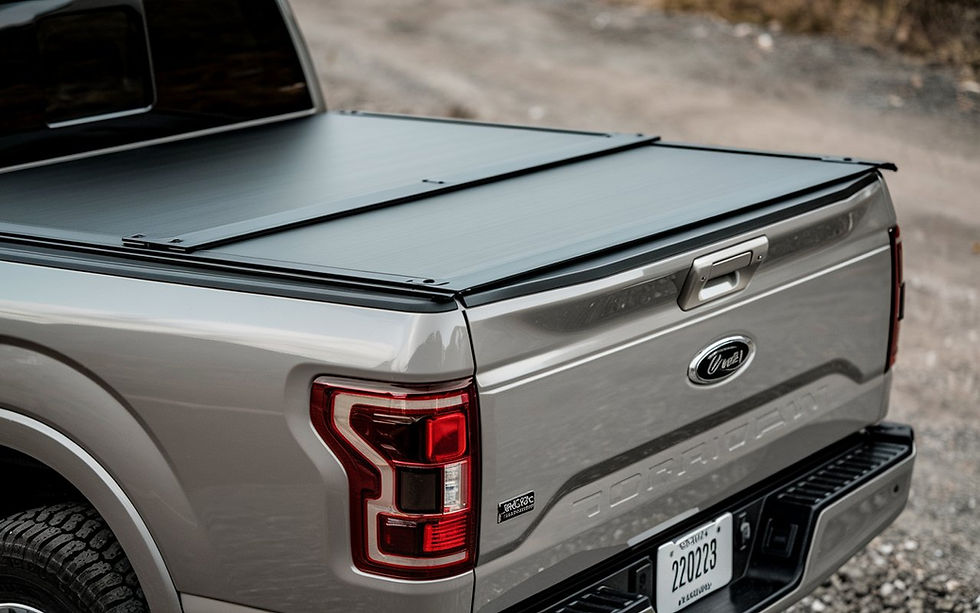
Hard tri-fold covers
Best for: Quick partial or full opening, flush appearance, no-drill installation
Pros: Good balance of security and access, easy to use
Cons: Panels stack near the cab when open, can block rear window
Hard tri-fold covers fold in sections, allowing partial or full bed access while maintaining strong security.
Hard roll-up covers
Best for: Faster bed access, security with flexibility
Pros: Rolls up completely for full bed access, strong security
Cons: More complex mechanism, canister takes up space
Hard roll-up covers roll up completely, giving you full bed access while maintaining strong security.
Retractable covers
Best for: Premium convenience, sleek design, full bed access
Pros: Smooth operation, low-profile look, customizable bed coverage
Cons: Highest cost, canister takes up bed space
Retractable covers slide into a canister at the front of the bed, offering complete flexibility.
One-piece hinged covers
Best for: Maximum security and weather protection
Pros: Solid design, excellent sealing, simple operation
Cons: Heavy, requires clearance behind the truck to open, limited bed access
One-piece hinged covers lift up like a car trunk, providing a solid, one-piece barrier.
Consider material and build quality
The material is the foundation of how long a cover will last and how well it will perform. Hard covers are typically made from aluminum, fiberglass, or reinforced composite materials.
Best materials for hard covers:
Aluminum: Strong, lightweight, corrosion-resistant, premium look
Fiberglass: Strong and weather-tolerant, excellent for harsh conditions
FRP (fiber-reinforced plastic): Good durability and lower weight
Hard plastic/ABS: Lighter and easier to handle, good for everyday use
Aluminum panels provide a premium look and higher rigidity, while fiberglass is strong and weather-tolerant. Powder-coated finishes help prevent corrosion and scratches, adding to the cover's lifespan.
Check security features
Security is one of the main reasons people choose hard tonneau covers. Hard covers that lock with the tailgate offer more theft protection than soft covers.
Key security features:
Tailgate lock integration: Cover locks when tailgate is closed
Automatic slam latches: Lock securely and automatically when panels are closed
Multiple locking points: Prevent break-ins with several latches engaging at once
Slash-resistant materials: Hard panels are harder to cut than soft materials
Hard covers are more difficult to puncture or damage, and they can be self-locking or integrate with a locking tailgate.
Evaluate weather protection
A hard tonneau cover should keep most water out, though no cover is completely waterproof. Weather sealing is what separates a good cover from a great one.
What to look for:
Weather-seal gaskets: Keep moisture out with tight tolerances
Drain tubes and channels: Route water away from the bed and out through factory drain holes
Tight-fitting panels: Prevent gaps where water can seep in
UV-resistant materials: Protect against sun damage and fading
Look for covers with solid rubber seals along all edges and drain tubes if your bed rails slope inward. Weather resistance, UV protection, and security features like improved locking mechanisms are all important.
Consider load capacity
If you haul heavy items or plan to mount accessories on top of the cover, load capacity matters. Common load ratings are 400-500 lbs or more.
What to look for:
Load rating: 400-500 lbs or more for heavy-duty use
Strong frame and sturdy panels: Handle daily use and heavy loads
Integrated T-slot compatibility: Support popular rack brands without drilling
Snow load capacity: Covers built to support heavy snow without sagging
If you plan to run racks or put weight on top of the cover, choose a model with a higher load rating.
Consider installation and compatibility
Installation difficulty varies by style. Clamp-on, no-drill options install with basic tools and come off easily when you need the full bed.
What to check:
Drilling requirements: Clamp-on vs. bolted options
Tool-free installation: Important if you want to remove the cover often
Compatibility with accessories: Toolboxes, ladder racks, bed extenders
Removability: Some covers can be removed without tools for full bed access
If you frequently use a bed extender, choose a cover that either stows fully or can be quickly removed without tools to maintain flexibility.
Match the cover to your use case
The right hard cover depends on how you use your truck. For work, a hard tri-fold or hard roll-up offers the best security and durability. For travel, a retractable cover gives you easy access. For maximum protection, a one-piece hinged cover is the best choice.
Quick guide by use:
Work trucks: Hard tri-fold or hard roll-up with strong locks
Travel and recreation: Retractable for easy access and sleek look
Maximum security: One-piece hinged cover with excellent sealing
Everyday driving: Hard tri-fold for quick partial or full access
Consider your climate
Your local climate affects which hard cover is best. If you live in an area with heavy rain, snow, or extreme temperatures, weather sealing and durability matter more.
Climate considerations:
Heavy rain or snow: Look for solid rubber seals and drain tubes
Extreme heat: Choose UV-resistant materials to prevent fading
Cold winters: Covers that do not freeze shut or sag under snow
Dusty conditions: Tight seals and durable materials
Quick checklist before you buy
Before you buy, make sure the cover you are considering has:
Exact fitment for your truck's bed size and model year
The right style for your needs (tri-fold, roll-up, retractable, hinged)
Strong materials like aluminum, fiberglass, or FRPautozone+1
Reliable locking with tailgate integration and automatic latches
Excellent weather sealing with gaskets and drain tubes
Good load capacity if you carry heavy gear
Easy installation with clamp-on or no-drill options
Compatibility with your bed accessories
Final takeaway
Choosing the right hard tonneau cover for your pickup truck comes down to knowing your truck, your cargo, and your daily routine. Start with exact fitment, then choose the right style for your needs, check security features, and evaluate weather protection and load capacity.
For most truck owners, a hard tri-fold cover offers the best balance of security, weather protection, and easy access. If you need maximum security, a one-piece hinged cover is the best choice. If you want premium convenience, a retractable cover is the top-end option.


Comments